

Aquí se encuentra más información sobre nuestro trabajo y sobre temas de derechos humanos a más profundidad.
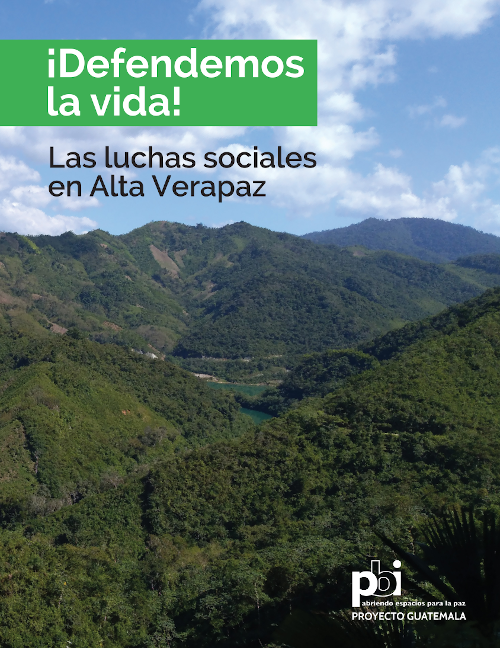
 ¡Defendemos la vida! Las luchas sociales en Alta Verapaz
PBI Guatemala acompaña diversas organizaciones y expresiones sociales guatemaltecas que defienden derechos incluidos en sus tres enfoques temáticos: lucha contra la impunidad, acceso a la tierra y defensa del territorio. Cuatro de ellas se ubican en Alta Verapaz: la Unión Verapacense de Organizaciones Campesinas (UVOC), la Asociación de Vecinos de Chicoyogüito de Alta Verapaz (AVECHAV), la Resistencia Pacífica de Cahabón y el Comité Campesino del Altiplano (CCDA) - Las Verapaces. De esta manera, en un mismo departamento puede acercarse a situaciones de lucha concretas relacionadas con la problemática estructural más fuerte de Guatemala: el acceso y control de la tierra y el territorio.
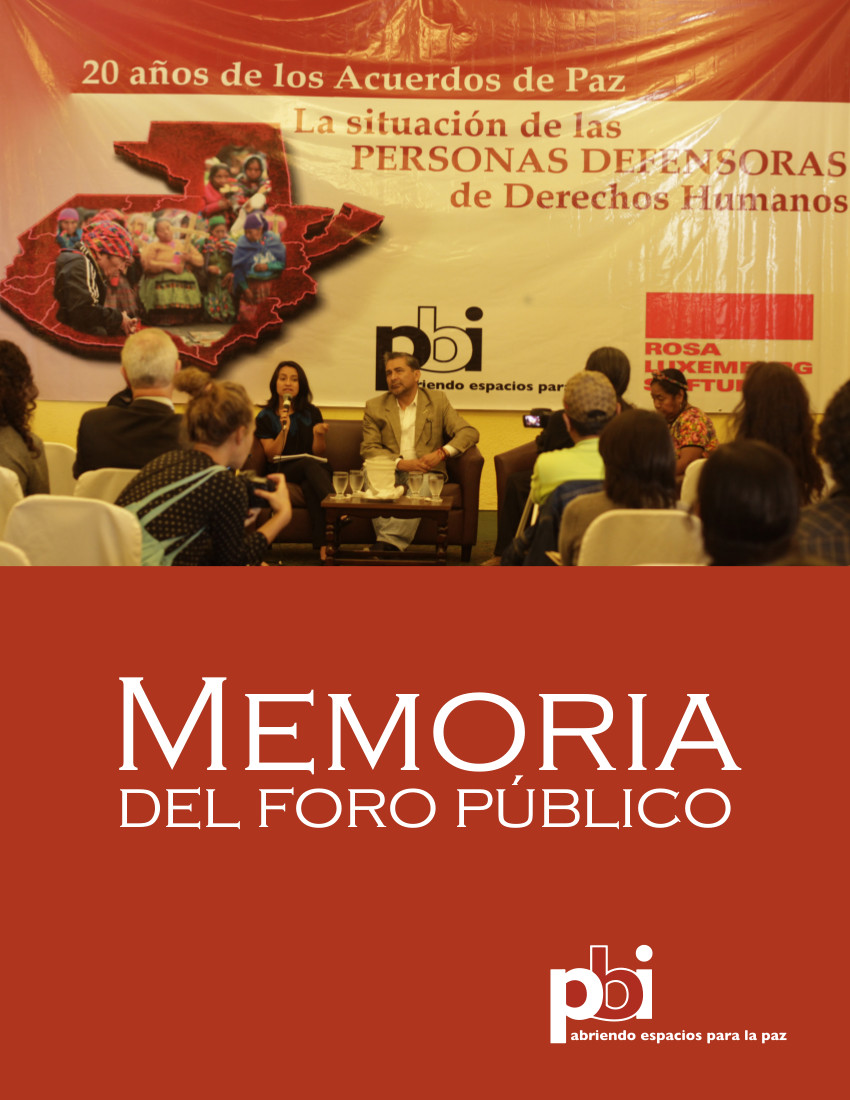
Memoria del Foro Público: 20 años de los Acuerdos de Paz, la situación de las personas defensoras de los Derechos Humanos
A propósito del vigésimo aniversario de la firma de los Acuerdos de Paz en Guatemala realizamos, con el apoyo de la Rosa Luxemburg Stiftung, un foro público para discutir la situación de defensoras y defensores de derechos humanos en la actualidad. En dicho evento se abordaron, tanto los avances acontecidos en los últimos años, como los retos pasados, presentes y futuros. El foro se realizó el día 5 de octubre de 2016 con la participación de Rosalina Tuyuc, Andrea Ixchíu, Marcos Ramírez y Yuri Melini, contando con la moderación de Anabella Sibrián. La presente publicación recoge la memoria de esta conversación. Como introducción al tema presentamos el ensayo ¿De enemigo a socio? Los cambios en la conceptualización del Estado sobre los actores de la sociedad civil como un elemento de garantías de no-repetición en Guatemala, que revisa el papel de la sociedad civil y de las personas defensoras en los Acuerdos de Paz, así como las políticas públicas y marcos legales creados para dar espacios (o no) al ejercicio de ciudadanía en Guatemala. Con esta publicación esperamos contribuir a la discusión sobre el balance de los Acuerdos de Paz trascurridos 20 años de su firma.
Boletín La Defensa Del Territorio y los Derechos Humanos en Petén
El presente artículo pretende visibilizar luchas y resistencias comunitarias en defensa de los derechos económicos, sociales, culturales y ambientales (DESCA), en defensa de la vida, la tierra y el territorio, ante la implementación de políticas estatales y megaproyectos extractivistas puestos en práctica sin la consulta previa, libre e informada de las comunidades afectadas. También se quiere mostrar la situación y desafíos a los que se enfrentan las defensoras y defensores de DDHH.
Boletín La Defensa Del Territorio y los Derechos Humanos en Petén (pdf 1.4 MB)
PBI - Diez años de las Directices de la Unión Europea para los defensores de derechos humanos: una evaluación desde el terreno
En junio de 2004 el Consejo de la Unión Europea, (UE), adoptó las Directrices de la Unión Europea relativas a los Defensores de los Derechos Humanos. Dichas Directrices, basadas en la Declaración de los defensores de derechos humanos de la ONU , reconocen que las personas defensoras enfrentan a menudo un riesgo particular por su labor en la defensa y promoción de los derechos humanos. Las Directrices contienen consejos y sugerencias dirigidas a las diferentes instancias de la UE, sus países miembros y sobre todo a sus misiones o embajadas para proteger, apoyar y reforzar la labor de los y las defensoras de derechos humanos en países terceros. Peace Brigades International, (PBI), ha estado presente en el debate y formulación de propuestas de mecanismos de protección desde antes de la publicación de las Directrices. Desde 2004, PBI ha hecho referencia a ellas de forma regular, pidiendo a las misiones y delegaciones de la UE de los países donde tenemos o hemos tenido proyectos, de tomar acciones para la protección de personas defensoras acompañadas. En el terreno, hemos podido registrar diversas respuestas que la UE y sus Estados miembros han dado y analizar la implementación de las Directrices a través del acompañamiento a personas defensoras y las interlocuciones continuas que mantenemos con las embajadas y la UE. Es el objetivo de este informe de compartir buenas prácticas, con la esperanza de que puedan ser replicadas, y evidenciar los retos que aún quedan por resolver con la perspectiva de seguir caminando hacia una mejor implementación de las Directrices.
PBI Marzo 2014 Petén: comunidades desplazadas en áreas protegidas
PBI Marzo 2014 Petén: comunidades desplazadas en áreas protegidas (pdf 1.3 MB)
Honduras ¿Nuevo panorama para los derechos humanos? La defensa de los derechos humanos en el contexto electoral 2013
Con motivo de la celebración de las elecciones del día 24 de noviembre de 2013, y habiéndose observado que continúa existiendo un cierre del espacio de trabajo de la defensa de los derechos humanos, PBI Honduras busca ofrecer a través de este informe una actualización sobre la situación de vulnerabilidad y riesgo de las personas que trabajan en este ámbito. Se ha querido exponer esta situación a través de casos concretos que ejemplifiquen mejor la realidad.
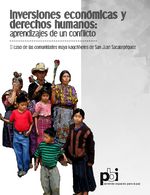
Inversiones económicos y derechos humanos: aprendizajes de un conflicto
El presente estudio de caso pretende documentar y extraer algunos análisis del conflicto surgido en 2006 y vigente hasta el día de hoy en San Juan Sacatepéquez, los cuales puedan aportar elementos que ayuden a prevenir procesos violentos en contextos similares. El inicio del conflicto en San Juan Sacatepéquez coincide con la llegada a este territorio de la empresa guatemalteca Cementos Progreso S.A. y su propósito de poner en marcha el Proyecto San Juan, el cual contempla la apertura de una cantera, la construcción de una fábrica de cemento y de una carretera. En dicho proyecto participan, con un 80% de la inversión la empresa guatemalteca Productos Mineros S.A., subsidiaria de Cementos Progreso 4 , y con un 20% la empresa multinacional suiza Holcim. Esperamos que este trabajo contribuya a identificar herramientas útiles para prevenir el estancamiento u agravamiento de otros conflictos semejantes.
PBI Caso San Juan (pdf 8.0 MB)
PBI Guatemala Boletin especial 2012 Peten
Este boletín especial es resultado del trabajo de observación internacional que mantuvo el equipo de voluntarios y voluntarias de PBI en Guatemala desde julio de 2010 y durante 2011; busca dar seguimiento a los encuentros que PBI ha mantenido en ese período con delegadas y delegados comunitarios de la región, que han solicitado atención a la situación de derechos humanos en Petén y su visibilización en Guatemala y en el exterior. Al mismo tiempo pretende, de alguna manera, ofrecer a estos mismos y otros actores interesados, una devolución de la información que hemos sistematizado: esperamos que pueda servir para complementar análisis publicados en los últimos años, así como publicaciones previas de PBI Guatemala sobre la situación de los derechos humanos en Petén.
PBI Guatemala Boletin especial 2012 Peten (pdf 4.3 MB)
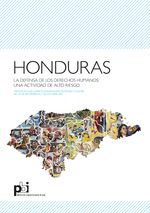
PBI PEC Honduras 2012
Desde el golpe de estado que tuvo lugar en Honduras el 28 de junio del 2009, Brigadas Internacionales de Paz (PBI) ha visto con gran preocupación el grave deterioro de los espacios de defensa de los derechos humanos que enfrentan las organizaciones, comunidades y personas defensoras en este país. En respuesta a una solicitud de acompañamiento internacional de las organizaciones que conformaban la llamada Plataforma de Derechos Humanos de Honduras, PBI realizó una primera visita de verificación de la situación de los derechos humanos en mayo del 2011. Posteriormente, y después de un arduo trabajo de análisis interno, PBI decidió evaluar la factibilidad de abrir un proyecto de acompañamiento internacional en este país y, en los meses de septiembre y octubre del 2012, se llevo a cabo una segunda visita con este objetivo. Este informe es el resultado del trabajo de investigación realizado en esta fase de exploración. El presente informe tiene el objetivo de contribuir a una mejora de las condiciones en las que personas, grupos y comunidades ejercen su defensa de los derechos humanos en Honduras. PBI ha considerado pertinente sistematizar algunas de las recomendaciones emitidas por los organismos internacionales y, de este modo, recordar la importancia de su debido cumplimiento, así como en base a la información recogida y a la experiencia adquirida en los últimos 30 años de trabajo en otros países de la región, reiterar a la comunidad internacional la imprescindibilidad de fortalecer los mecanismos internacionales de protección de defensores y defensoras de derechos humanos en Honduras.
PBI PEC Honduras 2012 (pdf 2.5 MB)
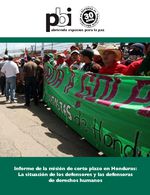
PBI Informe Honduras 2011 esp
Annual Report 2
PBI Informe Honduras 2011 esp (pdf 1.0 MB)
Informe de la Mision de Corto Plazo a Honduras
Desde el golpe de estado que se dio en Honduras el 28 de junio del 2009, Brigadas Internacionales de Paz (Peace Brigades International—PBI) ha estado observando con creciente preocupación el deterioro de la situación de seguridad para defensoras y defensores de derechos humanos en ese país. Constantemente se reciben reportes de asesinatos selectivos, amenazas, desapariciones forzadas, tortura, y hostigamiento generalizado contra miembros de la diversa y activa sociedad civil hondureña, resaltando la peligrosa situación que personas defensoras de derechos humanos hondureñas han tenido que soportar durante y después del golpe de estado.
En julio de 2010 PBI recibió una petición formal desde la Plataforma Nacional de Derechos Humanos de Honduras, solicitando la apertura de un proyecto de acompañamiento y observación internacional a raíz de la falta de garantías de protección en la realización de su labor en defensa de los derechos humanos. PBI decidió formar un grupo de observadores internacionales que realizaría una misión a corto plazo en Honduras.
Informe de la Mision de Corto Plazo a Honduras (pdf 188 KB)
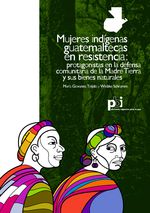
Mujeres indígenas guatemaltecas en resistencia
El presente informe tratará de dar seguimiento a otro publicado por PBI en el año 2006 sobre los impactos de la explotación minera, recogiendo ahora una perspectiva más amplia que toma en cuenta otras actividades de explotación de recursos naturales relevantes en el contexto latinoamericano, y aproximándose a la realidad específica de mujeres indígenas guatemaltecas. En contraposición a algunas alternativas existentes en el continente para impulsar un proceso de recuperación de los recursos naturales para los Estados, bajo control de los pueblos, el Estado Guatemalteco ha favorecido en el país su explotación privada, sin tomar en cuenta la opinión de aquéllos. Según la pagina web del Ministerio de Energía y Minas, en el año 2009 se han concedido en Guatemala alrededor de 400 licencias mineras; existen más de 15 proyectos hidroeléctricos operativos y casi otros tantos a punto de comenzar a operar (sumando un total 35). Junto a ellos también destacan los proyectos dirigidos al cultivo intensivo de palma africana, de maíz y de caña de azúcar.
La resistencia social indígena frente a estos proyectos y megaproyectos ha sido permanente y ha revestido diversas formas a lo largo del tiempo, pero en ella siempre han desempeñado un rol clave su propia cosmovisión y la territorialidad, elemento necesario para su supervivencia como pueblos.
Mujeres indígenas guatemaltecas en resistencia (pdf 5.0 MB)
Minería de metales y derechos humanos en Guatemala
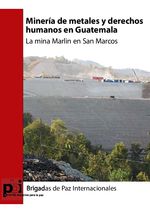
Desde mediados de 2000, empezamos a recibir peticiones de acompañamiento internacional. Por ello, realizamos un trabajo de campo que evidenció un retroceso y, en algunos casos, cierre de espacio de trabajo de los defensores de derechos humanos. Después de varias misiones exploratorias a lo largo de 2001, en abril de 2002, PBI decidió reabrir el proyecto para realizar una labor de observación y acompañamiento internacional en coordinación con otras ONG’s de acompañamiento internacional. En abril de 2003, se estableció una nueva oficina de PBI en Guatemala. A finales del año 2003, la cuestión de la minería de metales tomó auge en el debate nacional. Al mismo tiempo, los hostigamientos en contra de ambientalistas y líderes populares trabajando en esta temática fue en aumento lo que provocó la presencia de PBI acompañando a varias organizaciones y personas amenazadas. A partir de este momento, PBI ha ido profundizando en esta temática a través de la recopilación de información a lo largo de su presencia. El informe que les presentamos es fruto de esta labor de los miembros del equipo de PBI en estos años.
Minería de metales y derechos humanos en Guatemala (pdf 2.9 MB)
10 años sin guerra…esperando la paz:
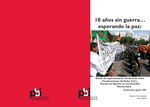
El primer estudio sobre el AFPC publicado por el Proyecto de PBI en Guatemala en 1998 recabó información sobre la I Fase del Acuerdo Cronograma y parte de la II Fase del mismo. Había transcurrido solo un año y medio desde la firma del Acuerdo y era un momento en el que las esperanzas eran muchas.Todos estábamos volcados en el acompañamiento al proceso del cumplimiento de los compromisos de los Acuerdos de Paz y empujados por el espíritu de los mismos. Sabíamos que el reto era grande y que habría que enfrentar en el camino no pocos obstáculos. A los diez años de la Firma de la Paz, este segundo informe pretende recoger una visión sobre el estado actual del cumplimiento de los compromisos suscritos. Se tratarán temas tan sustanciales como el voto en contra a las reformas constitucionales aquel 16 de mayo de 1999, que propició la búsqueda de otras posibles vías de reformas para implementar los compromisos pendientes. En las siguientes páginas analizaremos, siguiendo el esquema del propio Acuerdo, los alcances en la implementación del mismo, las cuestiones que todavía siguen pendientes, y algunos de los aspectos que sufren estancamiento o incluso retrocesos. En el 2005, a casi diez años de la firma de la Paz, se crea el Consejo Nacional para el Cumplimiento de los Acuerdos de Paz (CNAP) mediante la Ley Marco de los Acuerdos de Paz (Decreto Número 52-2005). Esta instancia, integrada por miembros de los tres Organismos del Estado, partidos políticos y la sociedad civil, tiene por objetivo dialogar, coordinar, consensuar, impulsar, promover, orientar e incidir en las reformas legales, políticas, programas y proyectos derivados que contribuyan al pleno cumplimiento de los Acuerdos de Paz. La creación del CNAP refleja la necesidad de seguir trabajando en la implementación de los compromisos acordados hace más de diez años desde las instituciones del Estado y la sociedad civil para alcanzar un verdadero Estado Democrático y de Derecho.
10 años sin guerra…esperando la paz: (pdf 732 KB)
Boletín especial: El Petén
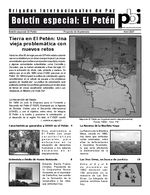
Hasta los años 50 del siglo pasado El Petén estaba cubierto casi en su totalidad por un denso bosque tropical. Las únicas comunidades que existían eran el pueblo maya itzá y mopán, y algunas comunidades extractivistas, como Carmelita y Uaxactun, que se habían establecido a fines del siglo XIX para la extracción de chicle, xate, pimienta y madera. Se estima que en el año 1960 vivían 21,000 personas en el Petén1. En 1954 empezó la política de colonización agraria, convirtiéndose en la válvula de escape a los problemas agrarios de Guatemala2. La política de colonización rural pretendía controlar los conflictos generados por la demanda de tierras en zonas socialmente vulnerables, como Las Verapaces, el Altiplano y la Costa Sur.
Boletín especial: El Petén (pdf 1.5 MB)